
A place not to miss in Istanbul: Chora Museum

April 3, 2011 by  
Filed under Articles

kariye museum the chora church monastry A place not to miss in Istanbul: Chora Museum

Many tourists begin to visit Turkey in April, and from then on you can bet that every month throughout the summer numbers will increase. Tourism season has begun.

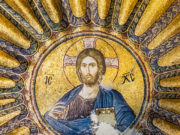
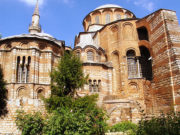
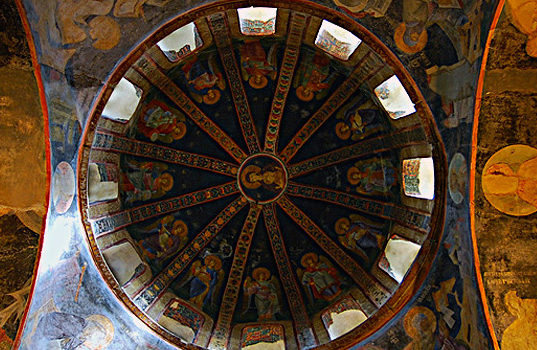
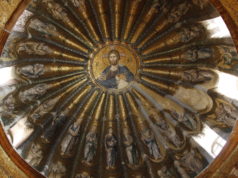
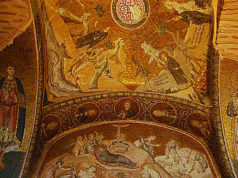
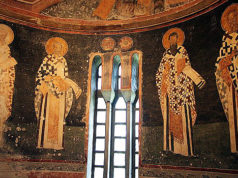
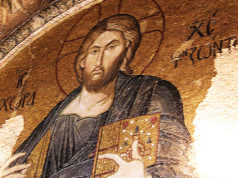
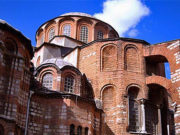
When my guests ask me what they should see in İstanbul. I always suggest that if they have time they must visit the Chora Museum. You may know the museum by its Turkish name, Kariye Müzesi. Kariye is the Turkish version of Chora, which was the Greek word for “countryside.” When you see where the church is situated today it takes some imagination to picture that at one time the location was countryside. The magnificent Chora Museum is an old Byzantine church, situated just inside the city walls at Edirnekapı. It is unparalleled in Turkey, and some would claim the world, for its beautiful frescos and mosaics. Although it is a bit off the routine tourist path, it is well worth the visit if you have time and enjoy mosaics and frescoes.

One of the leading frescos is the Anastasis fresco in the side chapel of the church. I wonder what you think of when you hear the word anastasios, “resurrection” in Koine Greek, the language of the New Testament. Easter Sunday this year is on April 24, the day when Christians remember Christ’s resurrection from the dead and many children enjoy Easter egg hunts.

It is said that the word anastasios is related to the name of Grand Duchess Anastasia Nikolaevna, the daughter of the last tsar of Russia, Tsar Nicholas II. When the Bolsheviks executed Tsar Nicholas and his family on July 17, 1918 it was rumored that the 17-year-old survived. It is unclear how much of this is fact, it could be just the wishful thinking of royalist supporters as her name means “I will arise.” I leave it for you to judge.

A brief summary of Byzantine history: In the days of Byzantine Emperor Constantine, when the monastery the church was attached to was built this was the country area outside of the city walls. Emperor Theodosius in A.D. 413 built his walls a little further out, but the name, meaning countryside, stuck.

During the reign of Justinian the monastery was devastated by an earthquake and was rebuilt as a basilica. It was restored again in 843. Considerable rebuilding and redecoration were carried out in the 11th century; Alexios Komnenos, who sponsored this work, is immortalized in a mosaic, standing behind the Virgin Mary. Another 150 years later the structure was enlarged and decorated with complex and beautiful mosaics by Theodore Metochites. Everyone who has visited Chora has reported back how much they enjoyed the visit, the wonderful mosaics that tell the life of Christ in pictures and beautiful frescoes that illustrate Old Testament stories.

One of the delights of the church is that it is on a much smaller scale than, say, the Aya Sofya. Most describe it as being intimate and cozy. The arched ceilings that are so vividly decorated are not 20 or 30 meters above your head, they are so near you can almost reach up and touch them. This enables the visitor to really appreciate the fine detail of the artistry.

When the church was converted into a mosque after Constantinople fell to the Turks in 1453, thankfully, instead of destroying the wonderful artwork (that was held as blasphemous by Muslims as it depicted so many people) they just covered it up. So these wonderful pristine examples of Byzantine art lay dormant over the centuries until 1948, when the Byzantine Institute of America began the painstaking work of revealing and restoring these hidden masterpieces. The result: The Chora Church, which had previously undergone a metamorphosis into the Kariye Camii, was reborn as the Chora (or Kariye) Museum.

I always enjoy seeing the stories depicted in pageantry throughout each of the walkways of the church. The frescoes tell the story of the raising of the dead. The lighting and shade, the power and movement in the figures, just add to the amazing explosive feeling of the grave bursting open and the Easter miracle occurring before our very eyes. However, these frescoes are just a warm-up for the main event in Chora. You should walk along one side of the church to a side chapel, the parekklession, or grave chapel. The parekklession ends with a wide-arched apse, and here is the famous fresco of the Anastasis.

Take an afternoon to stroll into the area of Kariye, and visit the museum and its wonderful Easter theme today.

Charlotte McPherson is the author of “Culture Smart: Turkey, 2005.” Please keep your questions and observations coming: I want to ensure this column is a help to you, Today’s Zaman’s readers. Email: c.mcpherson@todayszaman.com

VN:F [1.9.11_1134]
Rating: 8.0/10 (6 votes cast)
VN:F [1.9.11_1134]
Rating: +2 (from 2 votes)
Start Slide Show with PicLens Lite PicLensButton A place not to miss in Istanbul: Chora Museum

Visions of Byzantium

December 28, 2010 by  
Filed under Articles

kariye museum the chora church monastry Visions of Byzantium
The exhibition, Vaults of Heaven

Visions of Byzantium, presents a series of extraordinary ultra-large-scale photographs, many over six-feet tall, by the renowned Turkish photographer Ahmet Ertug. The exhibit is at the Kelsey Museum of Archeology at the University of Michigan through Jan. 23.

Focusing on paintings, mosaics, and architecture of the Byzantine world (6th–14th centuries AD), the photos provide a journey through such venerated sites as Istanbul’s Hagia Sophia and Church of Christ in Chora, as well as churches in the Cappadocia region of central Turkey, an area known for hidden Christian retreats hewn out of the region’s unusual volcanic rock formations.

Trained as an architect, Ahmet Ertug combines a deep understanding of Byzantine history and culture with an artist’s eye. His remarkable photographs capture the mystery and power of these ancient sites, offering viewers intimate views of the great domes, expansive structural details, and exquisite mosaics and paintings of these sacred spaces.

Accompanying the photographs are objects from the Kelsey Museum’s collections of Byzantine and Islamic material, including gold coins, manuscripts pages, small carvings, pottery, and wooden architectural fragments.

Christos didaskalos icon 243x300 Visions of ByzantiumVaults of Heaven
Visions of Byzantium will be displayed in two parts. Part I, on display from Oct. 1– Jan. 23, 2011, includes visions from two famous metropolitan churches in Istanbul: Hagia Sophia and the early 14th-century Church of Christ in Chora.

Part II, on display from Feb.4 – May 29, 2011, focuses on Karanlik, a monastic compound built in the 11th century; Tokali, the largest church in Cappadocia, with paintings from the 10-11th centuries and the church of Meryemana (“Mother Mary”), which is currently closed to the public.

Ahmet Ertug has been hailed as one of the world’s few living photographers who is “predestined to become a part of history.” His extraordinary images have been featured in major exhibitions from Japan and Turkey to Paris and London. A selection of his work is permanently displayed in the upper gallery of Istanbul’s famous Hagia Sophia.

Roald Dahl’s daughter finds peace as a nun
A 1974 graduate of the Architectural Association School of Architecture in London, Ertug began his photographic career in 1972, taking pictures of Caribbean festivals and street life in London. Although he continued to work as an architect, his interest in photography grew throughout the 1970s.

While working in Iran, he began photographing indigenous settlements and ancient Persian monuments, and in 1979, with the help of a research grant, he traveled throughout Japan, capturing images of ancient Japanese temples, Zen gardens, and festivals. After his year in the Far East, Ertug returned to Istanbul, having been hired as an architect for the conservation planning of the city. His increasingly intimate knowledge of the city’s historic quarters inspired him to begin photographing Istanbul’s impressive Byzantine, Ottoman, and Roman remains, using a large-format camera that enabled him to capture their full splendor.

In the 1980s, Ertug established his own publishing house, producing specially designed books of his photographs that are now recognized for their innovation in the printing industry. Both his books and photographs have been internationally praised for their beauty and “deep meditative energy,” which draw the viewer into his subject.

The Kelsey Museum of Archeology is located at 434 S. State Street, Ann Arbor. (734)-764-9304; www.lsa.umich.edu/kelsey

Todd Gerring is community outreach coordinator at the Kelsey Museum of Archeology

VN:F [1.9.11_1134]
Rating: 10.0/10 (1 vote cast)
VN:F [1.9.11_1134]
Rating: +2 (from 2 votes)
Start Slide Show with PicLens Lite PicLensButton Visions of Byzantium

Thomas Whittemore has been chipping away plaster walls off for 14 years.

September 26, 2009 by  
Filed under Articles

ZoeB Thomas Whittemore has been chipping away plaster walls off for 14 years.

From Time –  Jan. 27, 1947,

Glory be to God, who hath thought me worthy to accomplish so great a work; 1 have vanquished thee, O Solomon!

This was the proud thanksgiving uttered by Justinian the Great at the dedication of the church of St. Sophia (“Divine Wisdom”) in Constantinople 14 centuries ago. Justinian had something to crow about; “compared with the formation of the vilest insect,” as Historian Edward Gibbon pointed out, the church might be dull and insignificant, but the peak of its interior is one of the Highest in the world (180 feet) and as art, St. Sophia doubtless surpassed Solomon’s temple. Among the church’s beauties, noted Gibbon, were “a variety of ornaments and figures . . . curiously expressed in mosaic; and the images of Christ, of the Virgin, of saints, and of angels, which have been defaced by Turkish fanaticism. . . .”

Last week Boston Archeologist Thomas Whittemore returned home from Istanbul, with proof that the conquering Moslems had not been guilty of defacing, only of concealing, St. Sophia’s Christian mosaics. Whittemore, a spry, enthusiastic bachelor of 76, and director of Boston’s well-heeled Byzantine Institute, has been chipping away at the church’s plaster walls off & on for the past 14 years.

He had won the approval of Turkey’s late President Kamal Atatürk for the project. At first, because the church was in use as a mosque, Whittemore and his assistants had to take Fridays and Moslem prayer hours off. But in 1935 the Turkish Government made St. Sophia a public monument, and since then work has proceeded on a businesslike 9-to-5 schedule (except for winter months, when the place gets too chilly to work in). Whittemore went right on chipping through the war.

Under the plaster he has discovered close to a thousand years of history—in silver, gold, marble, and sparkling glass cubes put together into a parade of saints and influential sinners which stretches from 537 to 1453 A.D., when the Turks came marching in.

Among the mosaics already laid bare are portraits of Emperor Leo VI (made about 900 A.D.), Constantine the Great and Justinian II (995), Empress Zoë and Constantine IX (1042), John II Comnenus, Empress Irene, and their son, Alexius (early 12th Century).

Whittemore still has years of chipping ahead, and not much of an idea what he will find next. His men work mostly on scaffoldings high up on the walls. They use no chemicals to dissolve the plaster and paint which the Moslems spread over the murals (the Moslem religion forbids pictures of people or animals, as the Jewish forbids graven images). Whittemore has found it safer to flake off inch by inch with “a small steel chisel, [the kind] used in delicately cleaning fossils.”

Where they have been freed of plaster, St. Sophia’s walls and vaulting seem to dissolve in color. The mosaics, says Whittemore enthusiastically, meet “the vision as if charioted on a billow of light, each with an appeal as thrilling and compelling and personal as it seems possible to experience. The effect as you move past them has the cumulative power of a rising flood, and they engulf you in the religious enthusiasm of Byzantine conviction. . . . We may say of all [the mosaics] that we are in the presence of [works of] metropolitan masters, compared with which the contemporary mosaics in Italy, for instance, are provincial and derived. We have only to look at extant gth Century mosaics in Roman churches and their feeble treatment to assure ourselves that the fountainhead of the art was at Constantinople.”

Throughout the 1,000 years in which they were made, St. Sophia’s mosaics hardly varied in style or excellence. They were made by the best artist of each generation, working in “orchestral” anonymity of the sort that, Scholar Whittemore believes, “life is trying to induce us to return to.”

VN:F [1.9.11_1134]
Rating: 10.0/10 (1 vote cast)
VN:F [1.9.11_1134]
Rating: +1 (from 1 vote)
pixel Thomas Whittemore has been chipping away plaster walls off for 14 years.Start Slide Show with PicLens Lite PicLensButton Thomas Whittemore has been chipping away plaster walls off for 14 years.

Next Page »